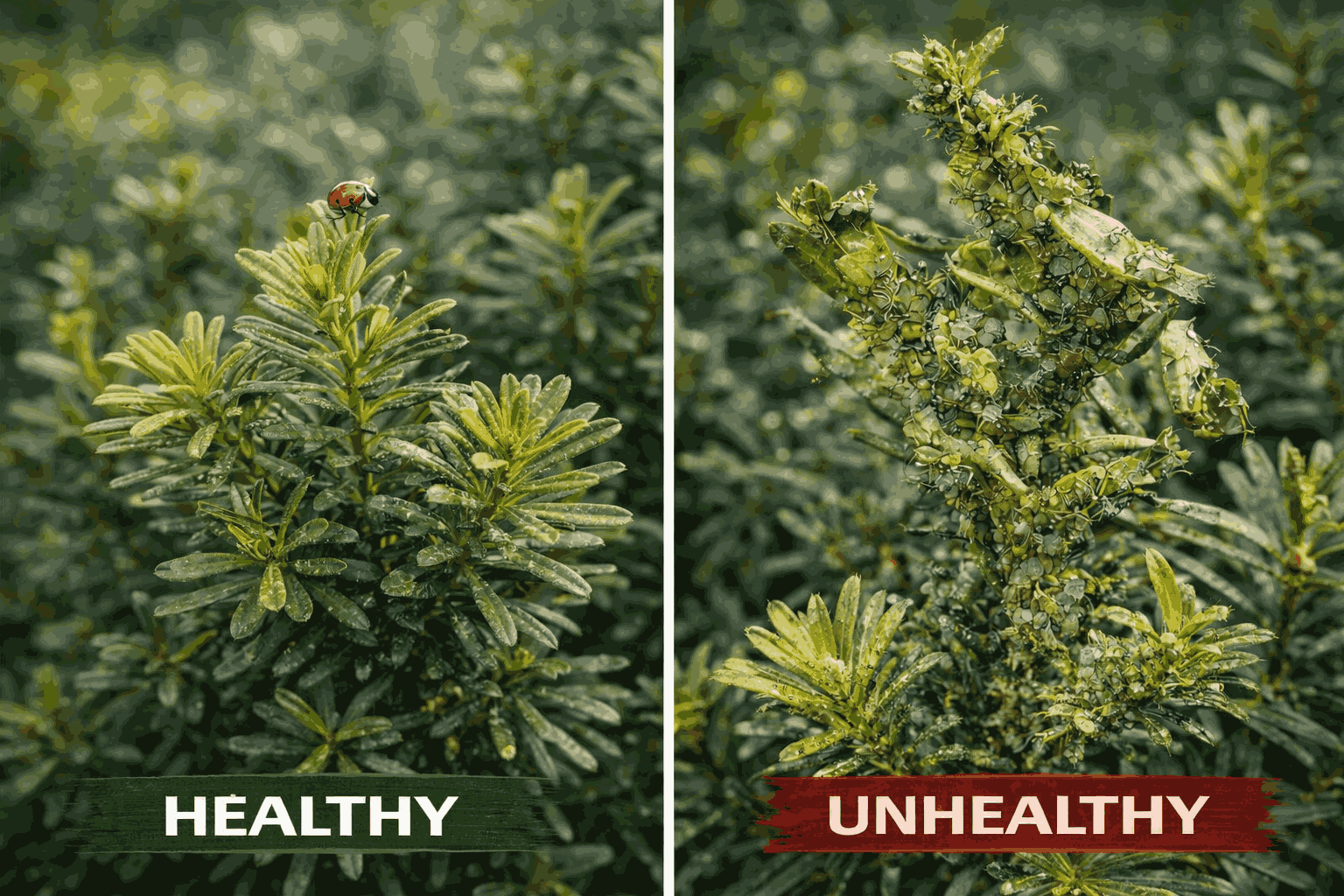
If you’ve noticed your yew bushes looking stressed, sticky, or distorted, there’s a good chance you’ve got an aphid problem. And while it might feel like your yard is under attack… there’s actually a natural battle happening behind the scenes.
Let’s break it down.
Aphids are one of the most common—and destructive—pests we see on ornamental shrubs like yews. They specifically target fresh, tender new growth, including soft stems, developing foliage, and nutrient-rich plant tissue. This makes newly emerging parts of the plant especially vulnerable, often leading to visible damage before homeowners even realize there’s a problem.
If your yews aren’t thriving, aphids are often the hidden reason
Now here’s where it gets interesting—June bugs (and similar insects in your yard’s ecosystem) play a role in controlling pest populations, including aphids. While June bugs are more commonly known for feeding on foliage as adults and living in the soil as grubs, they exist in an environment where beneficial predatory insects thrive. Many of these predators—like lady beetles, lacewings, and parasitic wasps—feed heavily on aphids. So when you see insect activity in your yard, it’s not always a bad thing—nature is working to balance itself..
Here’s the reality in Houston landscapes: natural control rarely keeps up with aphid infestations—especially on high-value shrubs like yews. Aphids reproduce extremely fast, Houston heat accelerates their population growth, and most landscaped environments simply don’t have enough natural predators to keep them in check. By the time nature catches up, your plant is already damaged.
Yews are a premium landscape plant, but they’re also highly attractive to aphids, sensitive to stress, and heavily dependent on healthy new growth for their appearance. When aphids attack that new growth, the plant begins to lose its shape, growth becomes uneven, and long-term health declines. Most homeowners assume it’s a watering issue, but in reality, it’s a pest problem—not an irrigation problem.
At GreenLeaf Houston, we don’t just spray and hope for the best. We identify pest pressure early, treat aphids before they damage new growth, and use targeted applications that protect the plant without overloading it with chemicals. At the same time, we strengthen overall plant health so it can better resist future attacks.
If your yews are struggling, it’s probably not your watering schedule—it’s what’s happening on the leaves. Aphids attack new growth, natural predators help but aren’t enough, and early, professional treatment is what truly makes the difference
Let’s take a look before the damage spreads.
Protecting what matters—so you can enjoy your yard again.
Call/Text: 713-234-5809
 713-234-5809